
culture:
Goan culture has been shaped mainly by the Hindu and Catholic population. People are mostly easy going ( 'sossegado' in Portuguese). With better connectivity by Air and Rail, there has been an influx of people from neighbouring states that has led to different cultures. Many Indians from other states have now come and settled here.
Goan Catholics generally acknowledge their Hindu roots, and carry traces of a caste-system within their social beliefs. It is recorded that in many instances the Hindus left one son behind to convert and thus continue to own and manage the common properties while the rest of the family preferred to emigrate to neighboring areas along with the idols representing their Hindu deities.
Over the years large numbers of Catholics have emigrated to the major commercial cities of Bombay and Pune and from there onward to East Africa (to the Portuguese colonies of Angola and Mozambique), to Portugal itself, and towards the end of the 20th century to Canada and Australia. Many old Goan ancestral properties therefore lie either abandoned or mired in legal tangles brought about by disagreements within the widely dispersed inheritors of the property. In recent years, expat Goans have been returning to their home state, often purchasing holiday homes along the coast (which are then converted into 'rent back' apartments, hired out to short-staying tourists by realtors).
The best time of the year to visit Goa is mid-November to mid-February when the weather is comfortable, dry and pleasant.
a state on India's West coast, is a former Portuguese colony with a rich history. Spread over 3,700 square kilometers with a population of approximately 1.4 million, Goa is small by Indian standards. It has a unique mix of Indian and Portuguese cultures and architecture that attracts an estimated 2.5 million visitors each year (including about 400,000 foreign tourists). Since the 1960s, Goa has been attracting a steady flow of visitors -- first the hippies and returning expat Goans, then the charter tourists (starting with the Germans in 1987), pilgrims visiting Catholic and Hindu shrines, those opting to settle in Goa as their home, people going for medical treatment, and a growing number of those who attend seminars and conferences in Goa

Regions:
Regions of Goa North Goa (Bardez, Bicholim, Pernem, Ponda, Sattari, Tiswadi)
The northern talukas. South Goa (Canacona, Mormugao, Quepem, Salcette, Sanguem)
The southern talukas.
By Indian standards, Goa is a very small state with only two districts -North and South Goa. These districts are together further divided into 11 talukas. These divisions, however, don't make much sense for a traveller. North and South Goa are similar, and each has its own "coastal" and "interior" areas. The major division in Goa is actually between the central coastal areas where the beaches are located and the hinterland. The coastal areas were under colonial rule for longer, reflecting more of Portugal's influence, including having a relatively larger Christian population. The interior is more Hindu, and has more protected forest areas, mining zones and villages.
Contrary to popular perception, Goa is not an island, though parts of what was considered "Goa" in the past were cut-off from the mainland by the many rivers this region is known for.
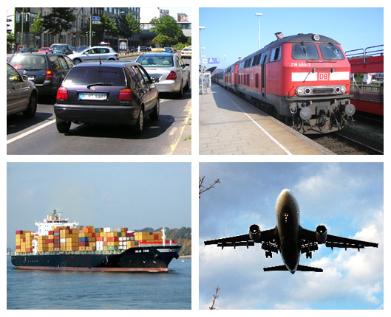
By plane The Dabolim airport in Vasco Da Gama is Goa's only airport. Some airlines fly directly to Goa, but most international flights arrive via Mumbai. Air India has international flights to Kuwait and UAE twice a week. Air Arabia has discount flights to Sharjah. Qatar Airways has flights to Doha, along with convenient connections to Western Europe, Africa and USA.
Flights can be chartered to the United Kingdom, Germany, Russia and Switzerland.
Many domestic airlines have daily flights to and from Bangalore, Delhi, Hyderabad, Mumbai, Pune, Chennai, Jaipur, Ahmedabad and Kozhikode (Calicut).
On arrival, take pre-paid taxis from Dabolim Airport. A yellow pre-paid taxi booth can be found 30 metres on the left when you exit the main building. There is also a pre-paid taxi stand in the international arrival area. Rates are slightly cheaper than the yellow cabs .
Many resorts pick up guests from the airport for free, so make sure you ask your resort for free
By bus: There are several bus routes from various cities, but most traffic is from mainly Mumbai and Pune. Due to increasing demand from the south, there has been an increase in buses and trains from Mangalore, Bangalore and New Delhi. Overnight buses from Mumbai to Goa are an alternative to trains and flying. Book in advance during the crowded seasons (particularly during the Christmas-New Year rush, for Carnival, or when other Indian regions have school holidays when families travel).
Kadamba Transport Corporation is the Goa state-run transport service. Its buses have seen better days, and more efficient times. There are also other state-run buses run by the governments of Karnataka (some services are efficient, specially the Volvo buses), Maharashtra, and Andhra Pradesh. Many private players also offer bus connections to other cities, with varying levels of discounts and efficiency, with the two usually being inversely related.
The main centre for booking train and bus tickets, in Panjim, is around the Kadamba inter-state bus terminus. Tickets for the Konkan Railway can also be booked here, though expect long queues during the holiday season (which in India, can also coincide with the timings when children have a school break).
By train: Indian Railways connects Goa with direct train services fromDelhi,Mumbai,Ahmadabad,Mangalore,Kochi,Kolkata,Tiruvananthapuram,Bangalore,Chennai and Hydrabad . The destination station is usually Madgaon in South Goa. Travelling to Goa by train is a real pleasure as the route passes through greenery and many tunnels. Goa is also connected to Pune via the Belgaum Miraj line. A railway station most tourists tend to miss is Thivim, which is served by most trains and is just 20 minutes away from Calangute beach by taxi. For budget travellers, this is the cheapest option, along with being faster and much more comfortable than travelling by road. It is advisable for tourists to make reservations well in advance as the major trains (Konkan Kanya, Nethravati Express, etc.) are usually heavily booked.
Trains from Mumbai and most other places have a quota of seats set aside for tourists. Quota tickets must be purchased in person at the rail station by the tourist and cannot be booked via a travel agent. Note that quota tickets are only sold at the station of origin. Tickets can be booked online.
Unless traveling on a shoestring budget, it is advisable to travel in air conditioned sleeper coaches. These are quieter and much more comfortable. Each bunk is provided with two freshly laundered sheets, a blanket, and a pillow. You can also have a hand towel on request.
Most travel agents will book tickets for a small fee (1200),but be aware that trains do get busy and you need to book in advance. Do not leave booking your ticket to the last moment as you may be disappointed.
By ferry Occasional cruise services used to sail from Mumbai to Goa. This was run in past years, but is currently discontinued.
Get Around:
High resolution maps are not available for Goa. For example, some popular isles are not shown in many maps.
Parts of Goa lack sign boards, so finding your way around could be challenging. When in doubt just ask - usually people are friendly and helpful- but don't expect precise answers(a so-called 'five minute drive' could take a good twenty minutes).
When driving, expect surprises like domestic animals and little children darting across the road and unmarked speed breakers / speed bumps.
By Moterbike
hoice of geared and un-geared motorbikes and scooters can be rented (typically without helmets). Those planning to stay long may consider buying one instead. Rentals are around Rs.300 a day (Rs.200 in non-peak season) for a Honda Activa scooter and a little more if one is looking for a geared motorcycle (you buy the gasoline as needed). Many small roadside shops sell gas at 90 a liter, while the going rate at a station (these are hard to locate in the coastal areas) is around Rs.81 a liter. For the motorbikes, always ask for a discount if renting long-term (one month or more). You should not have to pay more than RS.100 per day. Ensure that you have all the ownership documents of the bike. Also, avoid taking motorbikes with yellow plates out of Goa, as it is a punishable offense. Hiring a bike with white plates is ok for local travel in the immediate vicinity but if you want to travel further afield then always rent a bike with yellow plates. Wearing a crash helmet is compulsory when you go on any major roads (there is Rs.100 fine for not wearing one). Foreigners will need an International Driving Permit (Convention 1949); this is the first thing police will ask you for if stopped. You should also carry your normal driving licence with you
By Bus
Fares: Rs4-6. Buses are an inexpensive and great way to travel and see the country. Rs.10-15 will often get you a 30-40km ride
By Cars
Mahindra, Willys or Maruti Gypy makes are similar to the long wheel base version of the Suzuki Jimny. Some of these jeeps are open roof. Expect to pay around Rs.1,000 - Rs.1,200 a day.
There are many car rental companies available. Car rental agencies such as Clear Car Renta, Avis and Hertz


Our Staff
Our friendly and helpful staff will make sure you have a comfortable and enjoyable stay. This is our home, and it's our mission to help you feel at home too!
Customer Reviews
"This is sample review from a sample source." -- Sample Client, Location
"This is another sample review from another sample source." -- Sample Client, Location